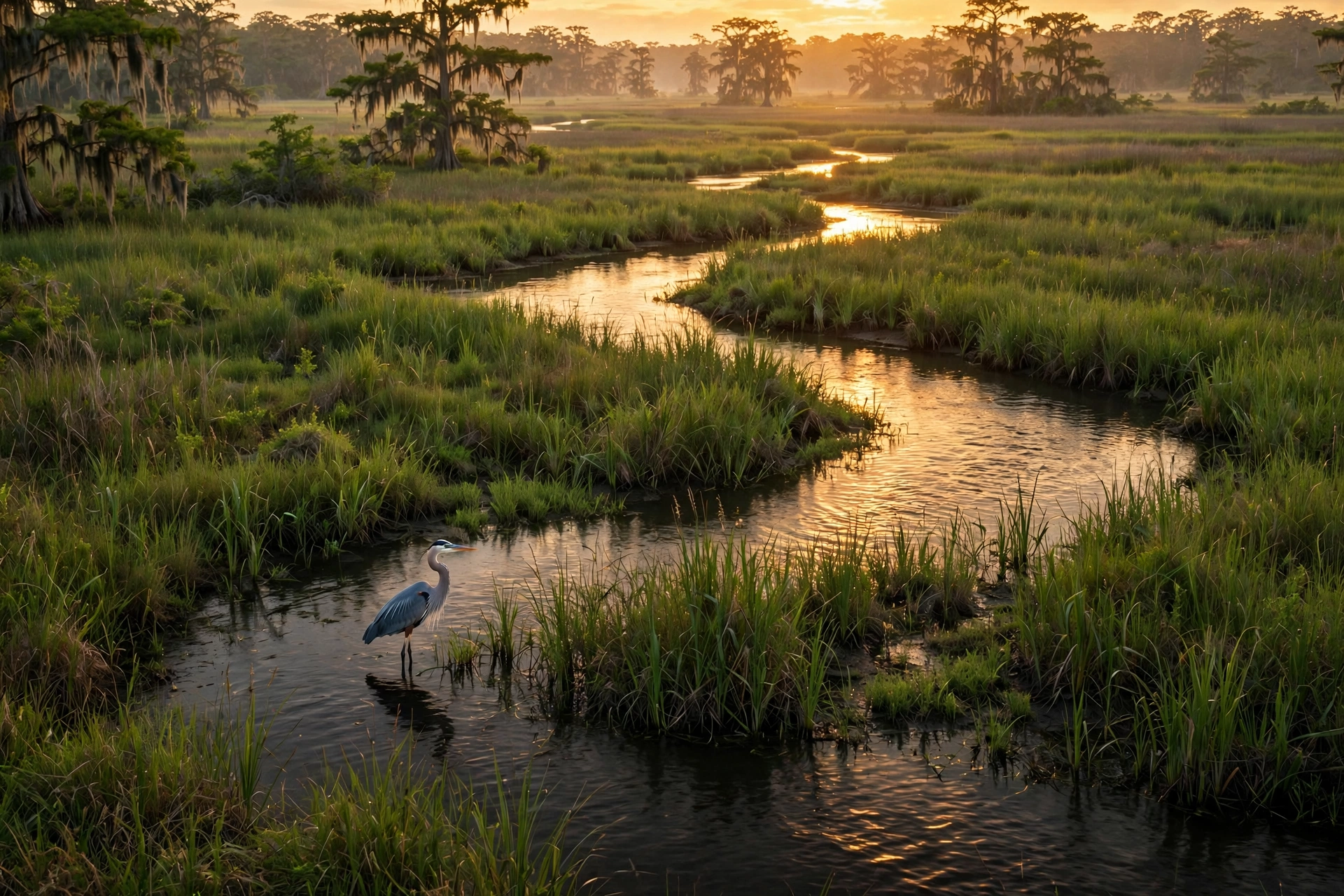
Mississippi Gulf Coast bayou marsh at golden hour — winding water through cordgrass with a great blue heron standing in the shallows
Mission Mother Earth · Gulfport · Biloxi · Pascagoula, Mississippi

Coast
Strong

This is our community. This is our pride. This is our coast.

Our bayous are beautiful, and they're worth looking after together. This page is a neighborhood watch for our water — see dumping, photograph it, report it, and log it, so the plastic and dumped junk in the water our families live on gets documented and dealt with. Neighbors helping neighbors. All glory to God, and all credit to the community.

PLEASE
NOTE
No Saturday call — there is no Coast Strong cleanup or meetup this Saturday Please do not head to Jones Park or Bayou Bernard Park expecting a Coast Strong crew this Saturday — no event is scheduled. This page stays up for one job: Bayou Watch. If you see dumping, photograph it from a safe distance, report it through the official channels below, and log it.
How to Report →

How this started · October 15, 2026

A dumped TV in the marsh. The neighbors showed up.

On October 15, 2026, a dumped television and heavy plastic were found sitting in the marsh at Bayou Bernard Park (James Hill Park), 1890 Switzer Rd, Gulfport — in water that runs to the Mississippi Sound, in water our kids will grow up on.

Nobody looked away. It was photographed, reported to the folks whose job is to help, and written down — what, where, when — so anyone who wants to lend a hand can find it. The community was invited to respond together, and Coast Strong was born.

Plenty of good people and programs already look after pieces of this water — the state monitors beach bacteria, and cleanup crews do real work all along the coast. What the bayous themselves have been missing is a neighborhood watch of their own. That's why this hub exists: a place for neighbors to report dumping, keep good records, and look after Bernard Bayou, Turkey Creek, and Flat Branch together.

“This is our home. The planet is not corrupted by accident — it is corrupted by neglect, and neglect is a choice. We choose different. Mother Earth does not have a lobbyist. She has us.”
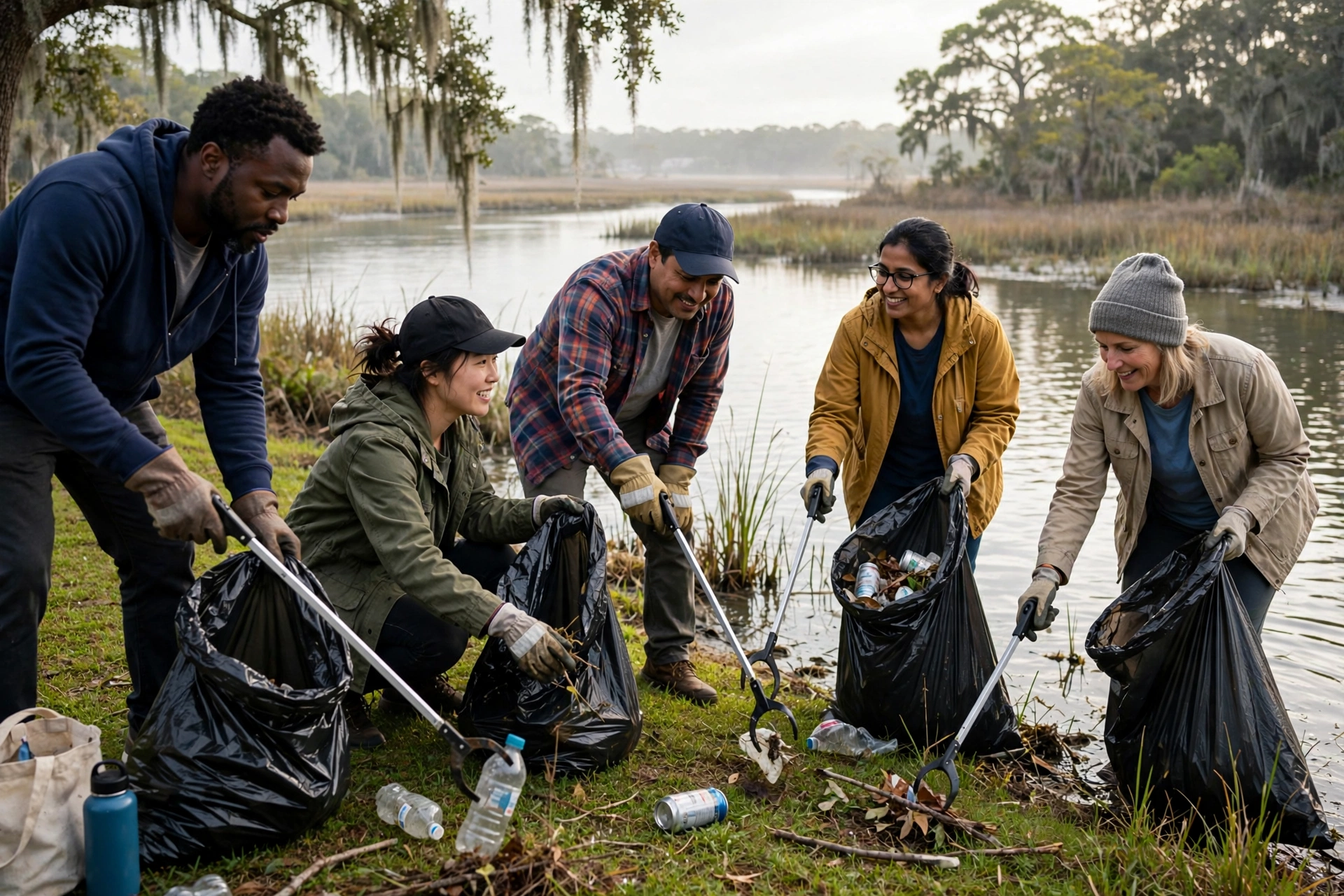
Community volunteers with gloves, grabbers, and trash bags cleaning along a bayou shoreline
The answer is people: neighbors with gloves on, bags in hand, working side by side and documenting everything they pull out.
9.75 tonsDebris pulled from Gulfport Lake / Industrial Seaway & Bayou Bernard in past Renew Our Rivers cleanups (4.5 + 5.25 tons) — this system is a known, documented dumping ground.
9 sitesOn the official 2026 Coastal Cleanup list — every one a beach, harbor, pier, or park frontage.
0Bayou sites on that list yet. The bayous are where a neighborhood crew can help most — and that's exactly where Coast Strong is glad to pitch in.

Why it matters

Our rivers. Our seafood. Our pride.

🌊 The water we live on

Families on this coast live on this water. We raise our kids on it, take them to the rivers down here, fish it, swim it, and grow up on it. That's why the tires dumped in those rivers cut so deep — this isn't somebody else's water. It's ours.

🦐 The seafood is the pride

This isn't just food — it's who we are. The crabs, the shrimp, the oysters, and the men and women who work that water for a living. What's dumped in the marsh ends up in the same water our seafood comes out of. Protecting the bayou is protecting the table, the industry, and the coast's name.

🔧 This is for fixing things

Coast Strong isn't about any one person — it's a work crew's habit: see something wrong in the water, document it, report it, and follow up until it's handled. Neighbors here have always looked out for their places. This is that same instinct, pointed at the bayous.

This work belongs to the whole community, and it runs until the water is clean.

Bayou Watch · Stay in the loop

Put your name on the watch list

There is no Saturday event to sign up for. If you want to stay in the loop on Bayou Watch — reporting dumping and keeping an eye on our water — you can add your name on the COAST STRONG form. It takes about a minute: how you want to help and the best way to reach you if something needs neighbors' attention.

No Saturday event — what that means

  • No call for Saturday: Coast Strong is not calling anyone to Jones Park, Bayou Bernard Park, or anywhere else this Saturday. There is no meetup time, no staging, and no crew gathering scheduled.
  • Nothing to check in for: if you were planning around a Saturday cleanup because of earlier posts, please disregard them — the record has been corrected, and this site matches it.
  • What you can still do: keep an eye on the bayous. If you see dumping or fresh debris, photograph it from a safe distance, report it through the official channels on this page, and add it to the Community Log.
  • Official programs run their own events: the Mississippi Coastal Cleanup program and other agencies manage their own sites and registrations separately — check their official pages directly for anything they schedule. That is their call, not a Coast Strong call.

What happens next?

No future cleanup date is set on this page, and none will be announced here until there is a real plan, arranged the right way, to announce. For now, the work is the watch: spot it, photograph it, report it, log it — the Bayou Watch alert network for fresh dumping during the week.

Bayou Watch · Community alert board

See dumping? Report it like this.

The idea is simple: when dumping is happening, neighbors hear about it right away, so help can come fast and the right folks get the word. One sighting, two destinations: the neighbors, and the official channel. Photo first, then this template, then the call.

🚨 DUMPING / DEBRIS ALERT — COAST STRONG
WHAT: [what was seen — dumping in progress / fresh debris, what kind]
WHERE: [location pin or nearest street / landmark]
WHEN: [date + time seen]
PHOTO: [attached]
STATUS: [reported to AGENCY via CHANNEL at TIME — add once filed]

Post the filled-out alert wherever your neighborhood actually reads — group text, Facebook group, Nextdoor — and add it to the Community Log below, so the whole crew can see what's been reported and where a hand is needed.

Safety — non-negotiable: Observe and report only. Never confront a dumper. No blocking vehicles, no arguments, no following anyone. Get the photo from a safe distance and let the report do the work. If anyone is in danger, call 911 — not the alert chain.

Official channels — call these too

City of Gulfport — 311Dial 311

Any non-emergency city report, including dumping. Fallback: 228-868-5700 · 311@gulfport-ms.gov. The city itself urges residents to photograph the vehicle and license plate. “No Dumping” signs carry a $1,000 fine.

Gulfport Code Enforcement228-868-5718

Cleanup of dump sites inside city limits falls to Code Enforcement + Public Works.

Gulfport Stormwater — Mark Kraninger228-868-5740 ext. 6619

Illicit discharges into storm drains and waterways. mkraninger@gulfport-ms.gov

National Response Center (24/7)1-800-424-8802

The federal front door for spills and sudden threats — staffed by the U.S. Coast Guard, relayed to the EPA / Coast Guard on-scene coordinator.

MDEQ — MS Dept. of Environmental Quality1-888-786-0661

State lead on water quality and illegal dumping. Emergencies: MEMA 24/7 at 1-800-222-6362 notifies MDEQ's response team.

MS DMR — Dept. of Marine Resources(228) 374-5000

Coastal and marine resources, Biloxi. info@dmr.ms.gov · Co-organizer of the Mississippi Coastal Cleanup.

EPA — Report a Violationepa.gov/tips

Federal violation form. EPA Region 4 customer service: 800-241-1754.

U.S. Army Corps of Engineers — Mobile District(251) 690-2658

Debris in navigable waters and unauthorized wetland fill — Clean Water Act §404 country.

Community Log · Keeping good records together

Good notes help everyone. Log every report.

The principle is simple: a report that's written down is easy to follow up on, easy to share with anyone who can help, and easy for the next neighbor to build on. This is the community log format — copy it, start your entry the day you file, and keep it where the crew can see it grow.

COAST STRONG — COMMUNITY LOG ENTRY
DATE/TIME:        [when the report was made]
AGENCY:           [who it went to]
CHANNEL:          [phone / email / online form]
REPORTED:         [what was reported — dumping, debris, source point]
RECEIVED BY:      [name, ticket/case number, or "awaiting confirmation"]
RESPONSE:         [what the agency said or did — update as replies come in]
FOLLOW-UP SENT:   [date + channel, or "none yet"]

This log starts blank on purpose — it's yours to fill. The first entries write themselves this week: the Bayou Bernard Park find, photographed and reported on Oct 15, and every call and email that follows it. Good notes help the agencies helping us, too — a clear, friendly record makes follow-up easy for everyone.

Following up — how to keep a report moving

A friendly follow-up goes a long way. The folks at these agencies juggle a lot of calls. If a week passes without word, the next step below goes out — with a thank-you for their help so far — and gets logged on the same entry.

1

Follow-up

Email the same agency contact, referencing the original date and ticket number, asking for status in writing.

2

Public records request

Ask the agency for its records on the reported site, so the crew can see what's been done and where a helping hand is still needed.

3

Elected officials

City council, county supervisor, state reps — share the log entries with them, so they can see the need and lend their support.

4

Local media tip

The log, the photos, and the story of neighbors pitching in together. A well-documented community cleanup is a story worth sharing.

The neural network · Outreach directory

Every board connects to another board

Coast Strong doesn't stand alone — it plugs into every crew, program, and partner already caring for this water, from the Gulfport 311 desk to the global Ocean Trash Index, and we're grateful for every one of them. Filter by level, open a card, and take the best first move listed. Where a letter is the move, it's a drafted outreach letter — nothing sends without a real person's review of the exact text.

No boxes checked = showing everybody. Check a level to narrow the board.

Mississippi Coastal Cleanup — the official program Local

A standing program (MSU Extension + Mississippi Marine Debris Task Force), and part of Ocean Conservancy's International Coastal Cleanup — every item logged becomes global data. All 9 of its 2026 sites are beach/harbor frontage. It runs its own events on its own schedule; Coast Strong makes no call for its sites.

Best first move: If you take part in the official program, register and get your site details directly from its official event page. Nothing on this page signs you up for it or calls you to one of its sites.

National Response Center — the federal front door Federal

Staffed by the U.S. Coast Guard, 24/7 — the single federal point of contact for spills and sudden threats to water. A report here is relayed to the predesignated on-scene coordinator: EPA inland, Coast Guard in the coastal zone. This is how a big incident gets the fastest, best-coordinated help.

Call: 1-800-424-8802 · Online: nrc.uscg.mil

Best first move: Use it when there's an active discharge, sheen, chemical smell, or immediate danger — and log the call in the Community Log.

EPA Region 4 — violations & wetlands Federal

The federal environmental agency for Mississippi: water pollution, illegal dumping, and wetland protection under Clean Water Act §404.

Violations: epa.gov/tips · Customer service: 800-241-1754 · Wetlands: Rosemary Calli, Calli.Rosemary@epa.gov, (404) 562-9846

Best first move: File the violation form alongside your city report, and note it in the Community Log so the crew can follow along.

NOAA Marine Debris Program Federal

The federal marine-debris tracker. The Marine Debris Tracker app logs debris with GPS and photos straight into NOAA's national dataset — the federal mirror of the global Ocean Trash Index.

Email: marinedebris.web@noaa.gov · App: Marine Debris Tracker (NOAA MDP + University of Georgia)

Best first move: Log the Bayou Bernard find in the Tracker app with photos and GPS so it's in the federal dataset, not just ours.

FEMA Region 4 — know what it can and can't do Federal

Stated plainly, because honesty is the whole brand: FEMA does not clean bayous. FEMA money moves only after a presidential disaster declaration requested by the governor, plus hazard-mitigation grants governments apply for. Routine dumping isn't its mission — the pollution chain runs NRC → EPA/Coast Guard coordinator → MEMA. If a storm ever scatters debris coast-wide, FEMA enters through MEMA then.

Region 4 (Atlanta, covers MS): 770-220-5200 · FEMA-R4-Info@fema.dhs.gov · News Desk: 770-220-5292

Best first move: None for a dump site — file with NRC/EPA/MDEQ instead. Keep this card handy so every report goes straight to the folks who can act on it.

MDEQ — Mississippi Dept. of Environmental Quality State

State lead on water quality, pollution control, and illegal dumping into state waters. Its public monitoring focuses on beach bacteria — which is exactly why neighbors logging what they see in the bayous is such a help to everyone.

Main: 1-888-786-0661 · Office of Pollution Control: (601) 961-5171 · Emergency path: MEMA 24/7 1-800-222-6362

Best first move: Call the report in, get a name or ticket number, and log it the same day.

MS DMR — Dept. of Marine Resources State

The state partner for the Sound and the bayous, based in Biloxi, and co-organizer of the Mississippi Coastal Cleanup with the Marine Debris Task Force. Its Seafood Technology Bureau is the water-testing lane — what lives in this water ends up as Mississippi seafood.

Call: (228) 374-5000 · info@dmr.ms.gov · 1141 Bayview Ave, Biloxi, MS 39530

Best first move: Report the debris, and ask DMR to log the bayou site so it is on the record. Outreach letter drafted — not sent

MEMA — Mississippi Emergency Management Agency State

State coordination: runs the State Emergency Operations Center and links county EMAs to state and federal help. MEMA coordinates; it doesn't do environmental enforcement — but its 24/7 line is the fastest route to MDEQ's emergency team.

Best first move: Hazmat-scale incident only — otherwise MDEQ and 311 are your first calls.

City of Gulfport — 311, Code Enforcement & Stormwater Local

Fastest first call for a specific dump site inside city limits. The city's own guidance: report dumpers through 311 and photograph the vehicle and license plate.

311: dial 311 · 228-868-5700 · 311@gulfport-ms.gov · Code Enforcement: 228-868-5718 · Stormwater (Mark Kraninger): 228-868-5740 ext. 6619, mkraninger@gulfport-ms.gov

Best first move: File the 311 report the day you see it — city, county, state, and federal reports go in parallel, all logged. City support letter drafted — not sent

Harrison County — Code Administration & Zoning Local

For trash and debris complaints in unincorporated county areas — the county side of the line when a dump site sits outside city limits.

Code Administration: (228) 832-1622, 15309 Community Rd, Gulfport · Zoning: (228) 831-3367 · Zoning complaints (incl. Trash/Debris category): Rose Keller, rmkeller@co.harrison.ms.us

Best first move: Use the county complaint route for county land; the zoning form has an explicit Trash/Debris category.

Ocean Conservancy — International Coastal Cleanup Global

The Mississippi Coastal Cleanup is part of the International Coastal Cleanup, running since 1986. Data logged through the Clean Swell app uploads instantly to the Ocean Trash Index, the world's largest marine-debris database.

Best first move: Share the documented Bayou Bernard find with the cleanup team, so the bayou debris is counted in the same data as the beaches. Drafted — not sent

The Ocean Cleanup Global

Built its name on stopping plastic in rivers before it reaches the ocean. Bayou Bernard drains to the Mississippi Sound — the tap is still running in America's bayous, and here's a community turning it off by hand.

Best first move: The master outreach letter, global variant, with the documented Bayou Bernard find attached. Drafted — not sent

Surfrider Foundation Global

A grassroots chapter network built for exactly this: local water, local people, clean-water testing and advocacy.

Best first move: Ask whether a Mississippi Gulf Coast chapter or regional contact exists, and how a Gulfport crew plugs into their network. Drafted — not sent

EARTHDAY.ORG — Great Global Cleanup Global

Runs the Great Global Cleanup. A documented local cleanup with photos and pound counts is their native currency.

General: info@earthday.org · Media: davies@earthday.org · Partnerships: charron@earthday.org

Best first move: Share the standing Bayou Bernard watch with the Great Global Cleanup network, with the documented find and reports as they build. Drafted — not sent

4ocean Global

A cleanup company with a huge public audience; partnerships are their front door. Amplification, not money, is the ask.

Best first move: Partnerships email — a working crew in Gulfport with real numbers, asking to be amplified. Drafted — not sent

Plastic Pollution Coalition Global

A global alliance of 1,300+ organizations. Groups can apply to join — which puts Gulfport's name on a global roster.

Best first move: Coalition application plus a short note to the press inbox with the public statement attached. Drafted — not sent

UNEP Clean Seas — #CleanSeas Global

The UN's global anti-plastic campaign — and the Mississippi River Basin itself has joined Clean Seas, so the Gulf Coast is already inside this story. Honest note: Clean Seas takes pledges from governments, companies, and organizations — there is no citizen tip inbox, and we won't pretend otherwise.

Campaign platform: cleanseas.org

Best first move: Public alignment — post the Gulfport facts under #CleanSeas and let the orgs above carry it upward.

Healthy Gulf (Gulf Restoration Network) Gulf Regional

The Gulf's own clean-water coalition, New Orleans-based, with a long Mississippi organizing history. Clean water and healthy marshes are their home turf — and we're glad they're on this water.

Site: healthygulf.org · Phone: (504) 525-1528 · (No public general-inquiries email confirmed — use the site contact route or phone first.)

Best first move: Call, don't email. Tell them about Bayou Bernard, ask who their Mississippi person is now, and offer the community log as it builds, and ask how Coast Strong can support their work. Drafted — not sent

Lower Mississippi Riverkeeper Gulf Regional

Runs a public “Report an Incident” channel with photo upload, built for citizens who find pollution. Their patrol ground is the lower Mississippi River in Louisiana — Bayou Bernard is outside it, but they're the closest Waterkeeper and a referral costs nothing.

Report an Incident: lmrk.org/contact-us · Phone: 225-928-1315

Best first move: File the Bayou Bernard find through the incident form with photos, and ask plainly which Waterkeeper covers the Mississippi Sound. Drafted — not sent

The Nature Conservancy in Mississippi Gulf Regional

Protects Mississippi coastal marsh, including the Pascagoula system, with a coastal office in Ocean Springs — one county over from the bayou.

Mississippi chapter: nature.org — MS contact page · Coastal office (Ocean Springs): 228-219-4580

Best first move: A short letter to the Mississippi chapter — neighbors cleaning the marsh, asking to be connected to their coastal team. Drafted — not sent

Audubon Mississippi (Audubon Delta) Gulf Regional

Mississippi's coast is bird nursery ground — debris in the marsh is habitat damage, and Audubon Delta staff already work Gulfport-area sites.

Best first move: One page to the Policy Director: the find and the ask — who on the coastal team should receive Bayou Watch updates? Drafted — not sent

Turkey Creek Community Initiatives & Land Trust for the MS Coastal Plain Gulf Regional

The organized community presence already on our home watershed: Turkey Creek residents protecting their creek's natural and cultural resources, assisted by the Land Trust — which also holds the Turkey Creek Greenway. Bernard Bayou has no dedicated friends-of group yet. That's a seat Coast Strong can grow into, standing next to the neighbors who've done it longest.

Land Trust for the Mississippi Coastal Plain: P.O. Box 245, Biloxi, MS 39533 · 228-435-9191 · ltmcp.org

Best first move: Introduce Coast Strong as a neighbor, not a rival — offer help watching the water, and ask what the watershed veterans wish someone had told them at the start.

WLOX — Biloxi / Gulfport local news Media

The coast's own newsroom. A documented citizen cleanup — neighbors pitching in, with photos and results to share — is a story worth telling.

News desk: (228) 896-2563 · Tips: producers@wlox.com · Main: (228) 896-1313

Best first move: Call the news desk with the documented find in hand.

Associated Press — Jackson / national wire Media

AP's Jackson reporting feeds every paper in Mississippi. The media tip is written and paste-ready: who, what, when, why it matters, and photos of the documented find available.

Newsroom: ap.org/contact-us/contact-the-newsroom · Secure tips: ap.org/tips (AP publishes no public tips email — use the newsroom page.)

Best first move: Share the documented find and the Bayou Watch reports as they build. Drafted — not sent

One bayou drains to the Sound. The Sound drains to the Gulf. The Gulf is the world's ocean — what we log here is counted everywhere.

Coast wide · Worldwide

From one bayou, to the whole world.

Coast Strong starts on our banks — but the water, the data, and the word all travel. Every find a neighbor logs here plugs into the worldwide cleanup movement, and every post carries this coast's story to people who can amplify it, fund it, and copy it on their own water.

Log it — and it's counted worldwide

Debris logged through the Clean Swell app or a cleanup data card uploads to Ocean Conservancy's Ocean Trash Index, the world's largest marine-debris database. A TV pulled out of Bayou Bernard lands in the same numbers as cleanups on every continent.

Track it — and the federal dataset sees it too

The NOAA Marine Debris Tracker takes the same find, with GPS and photos, into the national dataset — the federal mirror of the global index, kept by the Marine Debris Program in the directory above.

Post it — and the world can answer

Photos travel farther than any letter. A documented find posted with #CoastStrong and #CleanSeas puts this bayou in front of the worldwide cleanup community — the Ocean Cleanup, Surfrider, 4ocean, and EARTHDAY.ORG networks are already on this page, waiting on real local work to amplify.

🌐 Post it worldwide — copy it, fill it in, put it everywhere

One post, every platform your neighborhood — and the world — actually reads: Facebook, Instagram, X, Nextdoor, group texts. Attach the photo, keep the facts straight, and let the hashtags carry it past the county line.

🌊 COAST STRONG — BAYOU WATCH · MISSISSIPPI GULF COAST, USA 🇺🇸
WHAT I SAW: [dumping / debris — what kind]
WHERE: [bayou, park, or nearest street]
WHEN: [date + time]
REPORTED TO: [agency + channel — or "filing today"]
PHOTO: [attached]
One bayou, one planet. We log it local and post it worldwide — every documented find feeds the global Ocean Trash Index, so a cleanup on this coast counts in the world's numbers.
#CoastStrong #CleanSeas #BayouWatch #InternationalCoastalCleanup

Coast wide · Three watches, one coast

Not just one bayou. The whole coast.

Coast Strong was never just Bayou Bernard, and never just Gulfport. This is a community effort to clean up the coast — so the watch now stands in three places, west to east across the Mississippi Gulf Coast. Same idea at every post: neighbors watching their own water, ready to photograph, report, and log anything dumped in it.

🌊 Bayou Watch — Gulfport

Bayou Bernard · Harrison County

Where Coast Strong started. Bayou Bernard and its creeks — Turkey Creek and Flat Branch — watched by the neighbors who live on them. The dumped TV and plastic found at Bayou Bernard Park on Oct 15 were photographed, reported, and logged here: the find that proved the pattern works.

⚓ Biloxi Watch — Biloxi

Tchoutacabouffa River · Back Bay of Biloxi

The Tchoutacabouffa is Biloxi's own river — it winds through the city and empties into Back Bay, the working water behind Biloxi's seafood fleet. Biloxi Watch is a standing watch post: neighbors keeping eyes on the river and the bay. Nothing has been reported here yet — that's the point of a watch. See it, photograph it, report it, log it.

🌲 Pascagoula Watch — Pascagoula

Pascagoula River · Jackson County

The Pascagoula River — one of the last great free-flowing rivers in America — runs through Jackson County down to the Sound. Pascagoula Watch carries the same neighborhood watch to the east end of the coast. A watch post, not an incident: if you see dumping on this river, the routine is the same — photo first, report it, log it.

Three watches, one coast, one community. Wherever you live on this coast, your water deserves eyes on it — and if your stretch doesn't have a watch yet, the pattern is right here: photograph it, report it, log it, and tell the neighbors.

Local water intel

Know your water: the Bernard Bayou system

The neighborhood's water is one connected system — bayou, creeks, lake, and seaway draining to the Mississippi Sound. If you live near Lemoyne Blvd, Dedeaux Rd, Canal Rd, or Orange Grove, this is your water too.

Bernard Bayou

The main stem — monitored from Highway 49 to the Industrial Seaway, with MDEQ stations at Orange Grove and off Canal Rd. The Oct 15 TV and plastic were found in its marsh at Bayou Bernard Park.

Turkey Creek

Flows ~12.9 miles and joins Bernard Bayou just north of the airport. Named one of America's 10 Most Endangered Rivers in 2021. Its historic community has been defending this watershed for years.

Flat Branch

The small tributary with an MDEQ monitoring station at the Dedeaux Road crossing — the closest named monitored stream to the Lemoyne Blvd neighborhood.

Gulfport Lake & Industrial Seaway

Where the system meets the Sound. Past Renew Our Rivers crews pulled 4.5 tons at Gulfport Lake / Industrial Seaway and 5.25 tons at the Seaway & Bayou Bernard — proof of both the problem and what volunteers can do.

Little Biloxi River

The next watershed northeast, near Lyman — part of the same coastal plain, same fight, watched by the same neighbors.

The watch, in one line

State monitoring = beach bacteria advisories (text “MDEQbeach” to 95577). Cleanup tallies come after the fact. The bayous get their extra eyes from the neighbors who live on them — and that's the watch we're building, together.

Before you step on the bank

Safety & gear

🎒 Bring

No program provides supplies at a Coast Strong site, because no Coast Strong event is scheduled. For any day you are out watching the bank on your own, bring your own:

  • Work boots (no sandals) and work gloves — extras for anyone who forgets
  • Sunscreen, hat, sunglasses
  • Refillable water bottle, plus a cooler of extra bottled water for the crew
  • Grabbers / pickers if you have them — saves backs, keeps hands off sharps
  • Buckets for sharp or heavy debris; heavy bags for what site bags can't hold
  • First aid kit in the truck; truck or trailer on standby for haul-off if the site needs it

⚠️ Work safe

  • Gloves on, always. Never grab anything you can't see.
  • Sharps — needles, broken glass, metal: do not bag by hand. Leave them, photograph them, and report them with the rest of the find.
  • No wading past the knees; no entering deep or moving water. Banks are slippery — work in pairs.
  • Watch for snakes, fire ants, and wasps along the banks.
  • Hydrate before you're thirsty. Shade break every 30 minutes — October in Mississippi is still hot.
  • Kids stay with a parent, on the bank, off the water line.
  • Stop work for lightning. No debate.
  • This is volunteer work — nobody is on the clock, nobody works hurt.

📸 Documentation protocol — write it down, share it proudly

BEFORE photos of a dump site from a safe distance · AFTER photos from the same angles once it is cleared · record date, site, what was found, and who it was reported to · file the log and photos the same day · share documented results publicly — people trust what they can see. Logged through Clean Swell or data cards, documented debris also lands in the global Ocean Trash Index: a cleanup removes plastic once; the data keeps helping long after.